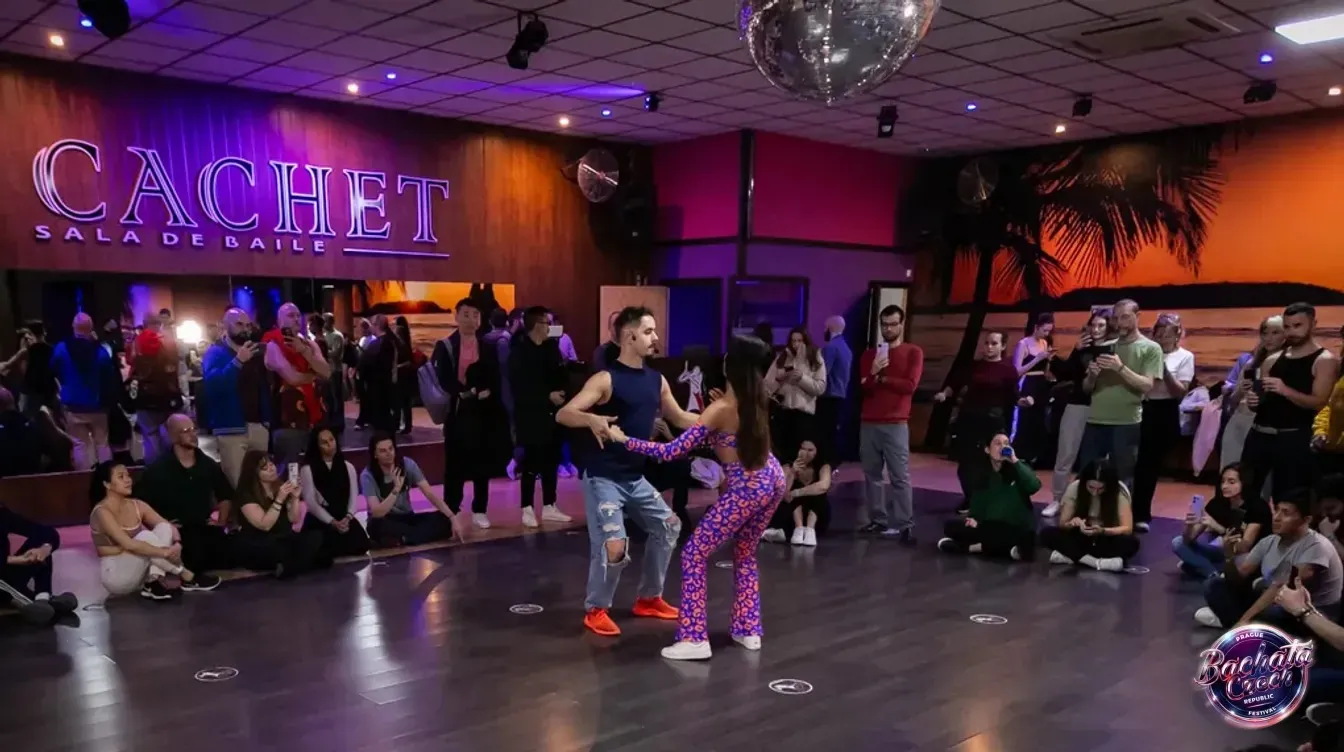
- Bachata: eight counts with a tap or hip accent, guitar-led music, flexible from playful to very connected. Usually the easiest start.
- Salsa: faster, with lots of turns and footwork, driven by percussion and brass. Rewarding but a steeper start.
- Kizomba: slow, walking, close embrace, from Angola. Simple steps, subtle lead.
- Many dancers do two or all three. The skills transfer.
- At a festival like BCR, the parties are 100% bachata, and workshops add zouk and reggaeton influences.
Bachata, salsa and kizomba often share the same schools and social dance events in Europe. They are often taught in the same building, danced at the same parties and confused by everyone who has not tried them. Here are the real differences, from the music to how they feel, and how to choose.
Bachata dance: the characteristics of bachata
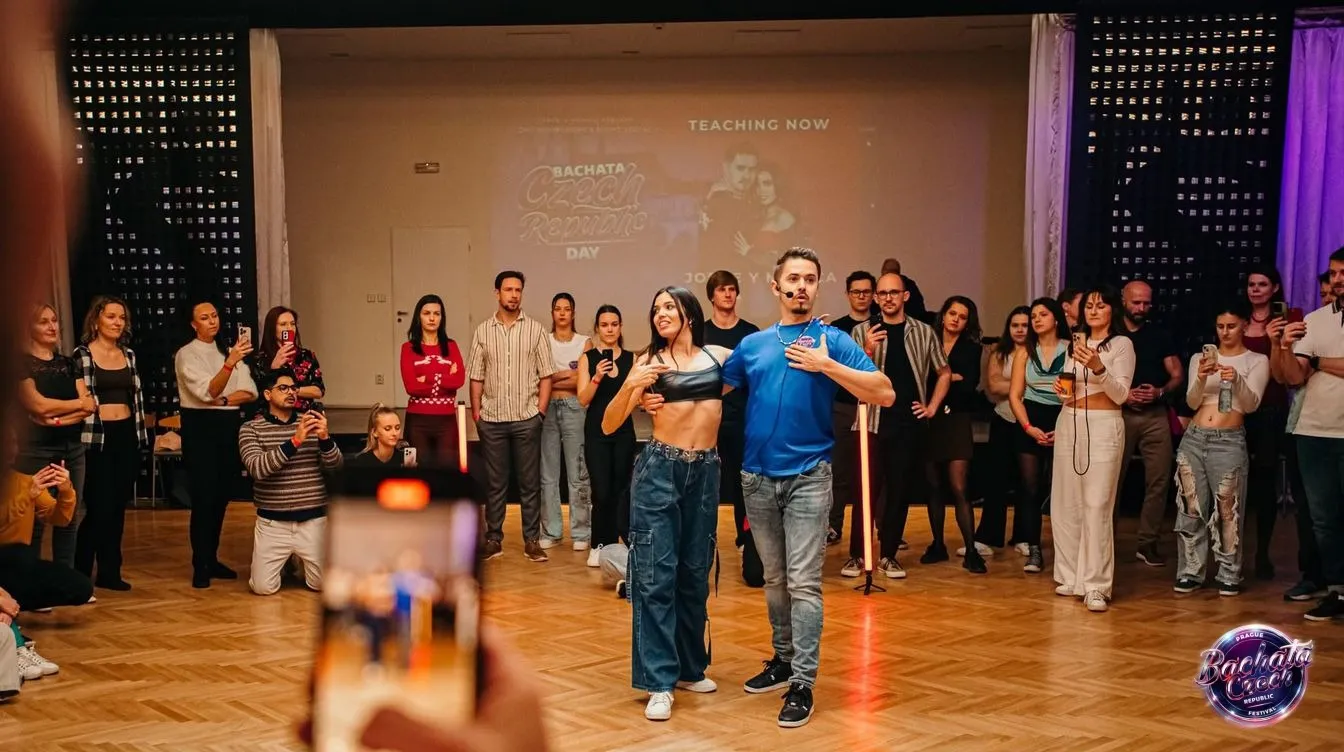
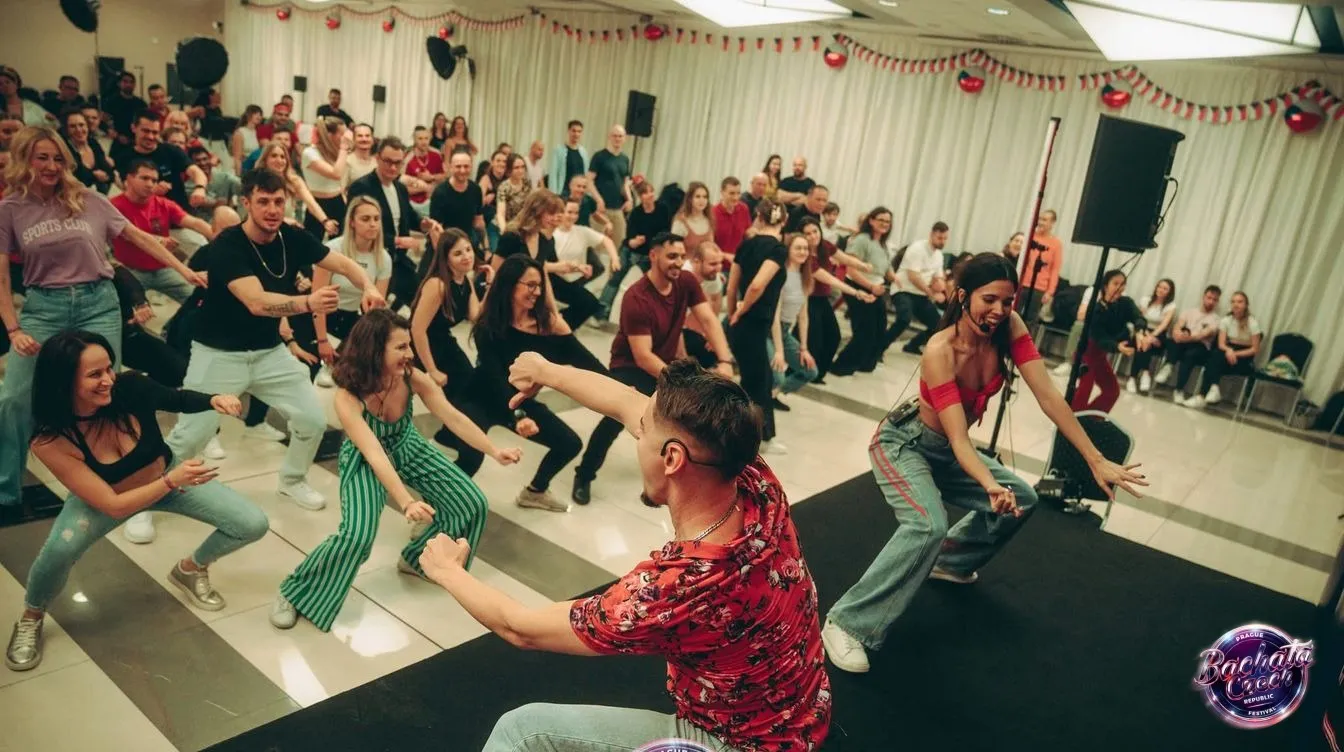
Bachata comes from the Dominican Republic. Bachata music is led by guitars, with the high requinto guitar playing the melody over bongo, bass and güira, and bachata songs are often about love and heartbreak. The basic step follows an eight-count pattern: three steps and a tap with hip movements on four and eight. Depending on the style it can be playful with lots of footwork (Dominican) or flowing with body waves and a close connection (sensual). Our guide to bachata styles explains the difference.
Salsa dance: rhythm, spins and Cuban salsa
Salsa grew in New York's Latin community from Cuban son and other Caribbean rhythms. Salsa music is fast and rich: congas, timbales, piano, brass, with roots in son and mambo. The dance has six steps in eight counts with pauses on four and eight, and the attention goes to turns, spins and shines. There are several styles: Cuban salsa (often called casino, with partners moving around each other, and rueda when several couples dance in a circle), and linear styles danced "on1" or "on2". Salsa dancers are known for fast spins and sharp footwork.
Kizomba in one paragraph
Kizomba comes from Angola: the dance grew out of semba, while the music also draws on Caribbean zouk. The music is slow and heavy on bass, often in Portuguese. The dance is a close embrace with walking steps, small weight changes and pauses. It looks simple and is all about the subtle lead and the connection.
Differences between salsa and bachata, and kizomba, side by side
| Bachata | Salsa | Kizomba | |
|---|---|---|---|
| Origin | Dominican Republic | Caribbean roots, shaped in New York | Angola |
| Tempo | Slow to medium | Fast | Slow |
| Basic | 3 steps and a tap, 8 counts | 6 steps in 8 counts | Walking and weight changes |
| Signature | Hip accent, footwork or body waves | Turns, spins, shines | Close embrace, pauses |
| Music | Guitars, bongos, güira | Congas, timbales, piano, brass | Bass-heavy, electronic or acoustic |
| Hold | Open to close | Mostly open | Close |
| First months | Quick to enjoy | Steeper learning curve | Simple steps, subtle lead |
Salsa or bachata: which is easier for a beginner?
Usually bachata, at the start. The bachata basic is slower and simpler, so you can dance a full song at a party after a few classes. Salsa asks for faster feet and more turns from the first weeks, which is why people often say salsa is harder to start and very rewarding later. In most schools, salsa classes and bachata classes both start from zero, so either is a fine first dance style.
Both get hard in the end. Good bachata needs musicality, body control and a clear lead or follow, and dancing it well at a festival level takes years, just like salsa.
Bachata vs salsa: which is more sensual?
It depends on the style and the dancers, not the dance. Kizomba and bachata sensual use a close embrace more often, and that intimacy is part of their appeal. Dominican bachata and most salsa are danced more open and more playful. In every style, how close you dance is your choice, and good dancers adapt to their partner's comfort. That is part of social dance etiquette.
Bachata or salsa: which dance style should you learn?
- You love guitars, romance and a mix of play and connection: bachata.
- You love fast music, energy and lots of turns: salsa.
- You love slow music, walking and a very quiet, deep connection: kizomba.
- You cannot decide: take a trial class of each. Many schools offer them, including in Prague, see where to dance bachata in Prague.
Can you learn salsa and bachata at the same time?
Yes, and many people do. Frame, timing, feeling the music and lead and follow transfer between the two dances, and most Latin dance communities welcome dancers who do both. If you find yourself mixing up the basics, focus on one until its timing feels natural, then add the second.
Where they meet: festivals
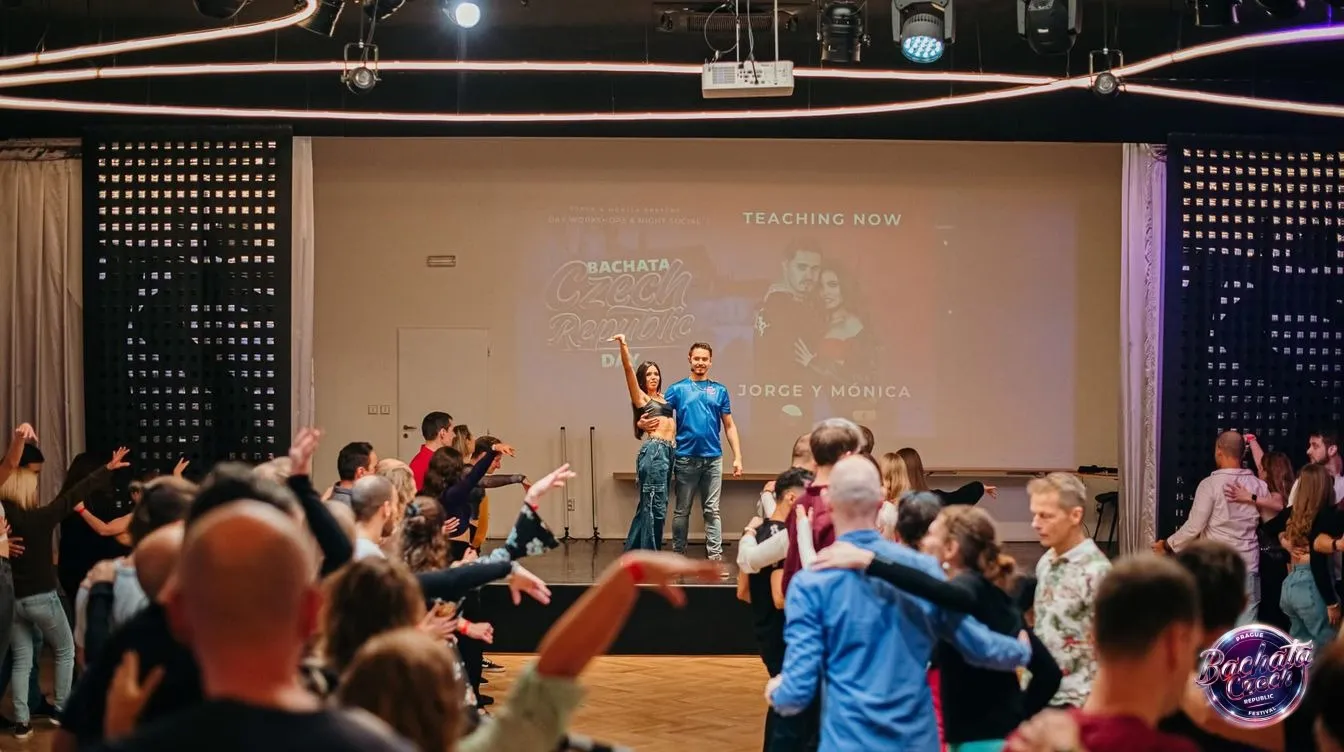
Many European festivals are mixed salsa, bachata and kizomba weekends. Others, like Bachata Czech Republic Festival in Prague, focus on bachata: the parties are 100% bachata, and the workshops cover bachata styles and fusions that borrow from other dances (Bachazouk adds zouk movement, Bachata con Reggaeton adds urban rhythm), plus separate reggaeton classes. The parties are 100% bachata in all its styles. If you are choosing your first event, our European bachata festival calendar lists the big ones month by month.
Questions people ask
What is the main difference between bachata and salsa?
Is bachata easier than salsa for beginners?
What is the difference between bachata and kizomba?
Do I need a partner to learn bachata, salsa or kizomba?
Can I learn salsa and bachata at the same time?

Jorge and Mónica are professional bachata dancers with more than fifteen years of teaching behind them. They run Jorge y Mónica Academy in Prague, organise Spanish Bachata Training Camp and Bachata Czech Republic Day and Night, and founded Bachata Czech Republic Festival, whose first edition in 2026 brought 600 dancers from more than 40 countries to Prague.